1999 Right Angles # 11 – by Gunnar Theel

1999 Right Angles #11 – by Gunnar Theel

.

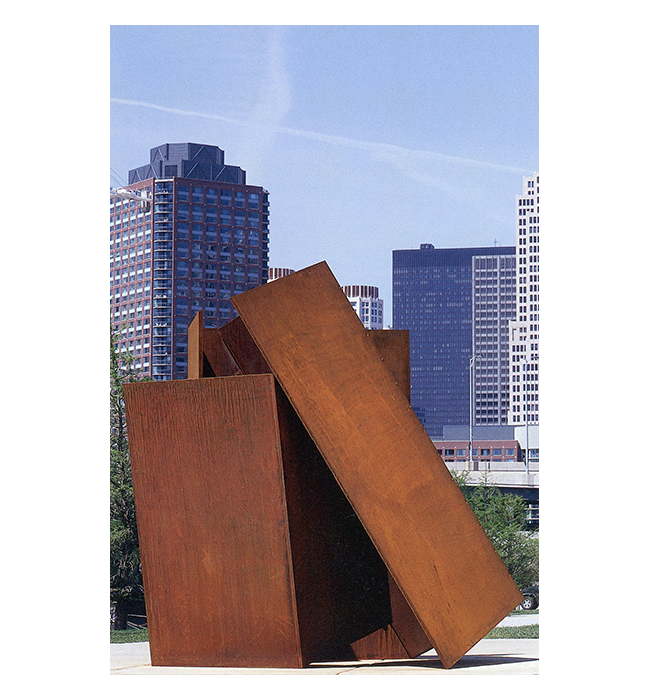
Right Angles # 11 – by Gunnar Theel


1999

Steel / 9′-6″H

.
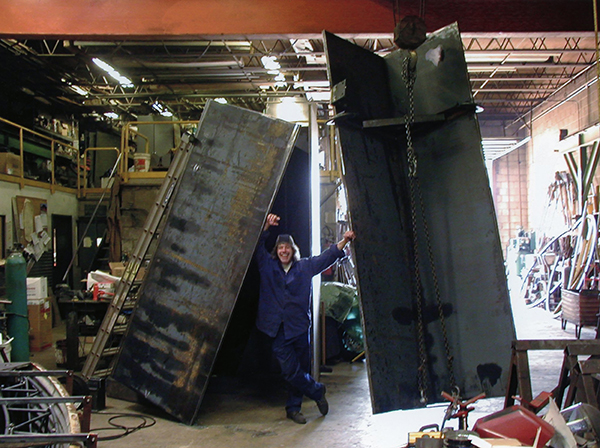
Derick Malkemus working on Gunnar Theel sculpture

.

The sculpture is part of Gunnar Theel’s Right Angles Series, which includes:
Three L-shaped units, Nereid and the Structure

THREE L-SHAPED UNITS, each composed of two steel plates joined at right angles, lean against and into each other, and create an assemblage of angled planes and spaces articulated by light and shadow, and put in motion by the viewer drawn around the sculptures.

NEREID sculptures are part of the Right Angles series. They are inspired by the marble Nereid statues and their “wind swept drapery” at The British Museum, London.

The STRUCTURE sculptures are inspired by architecture, in particular the house as vessel, container, body. Again, the angled planes diffuse the border between the exterior and interior surfaces, and the viewer drawn around the oxidized steel sculptures discovers openings like doors, windows, and solid walls.

In the words of Gunnar Theel…
MY ART is influenced by architecture. The right angle in the physical world, and its inherent sensations of equilibrium and quiet are my reference points as I work towards the finished sculpture by “simplification of design and refinement of proportions”. (Mies van der Rohe).
1998: Breaking Bonds – by Stephen Luecking

1998: Breaking Bonds – by Stephen Luecking

.

Breaking Bonds – by Stephen Luecking
1998 / Stainless Steel and Copper.
Commissioned by the Illinois CBD Art in Architecture Program
Location: University of Illinois at Urbana-Champaign (Material Science Building).

“One of the rewards of my landing a public commission is the opportunity to once again work with Vector. The level of craft and art knowledge and their superb problem solving skills make them as much the sculptors’ colleagues and collaborators as their fabricator.”

.

1998: Breaking Bonds – by Stephen Luecking

.

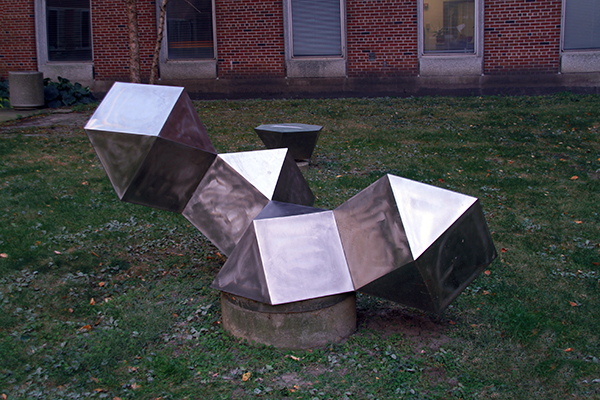
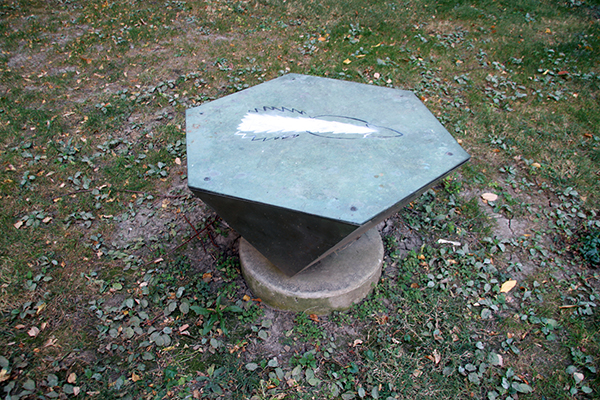
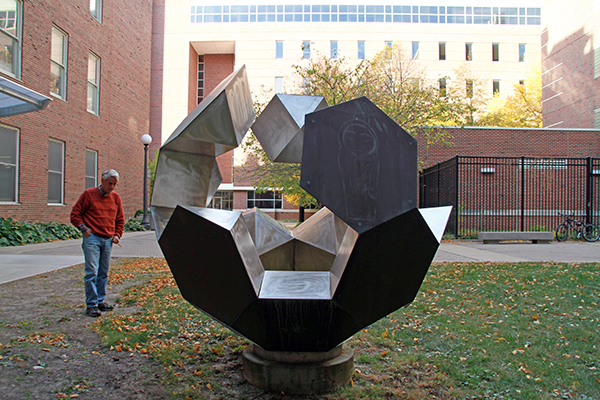
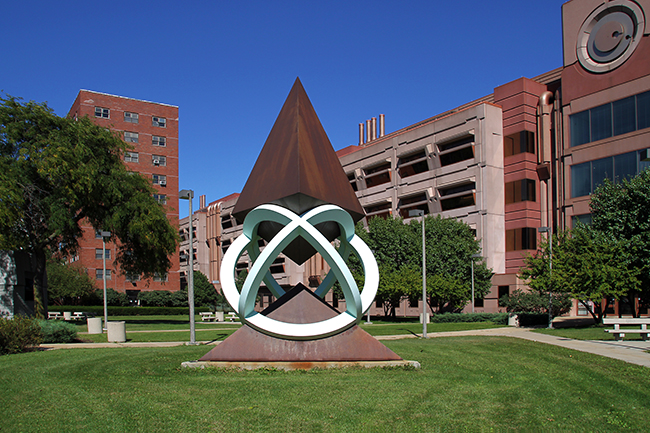
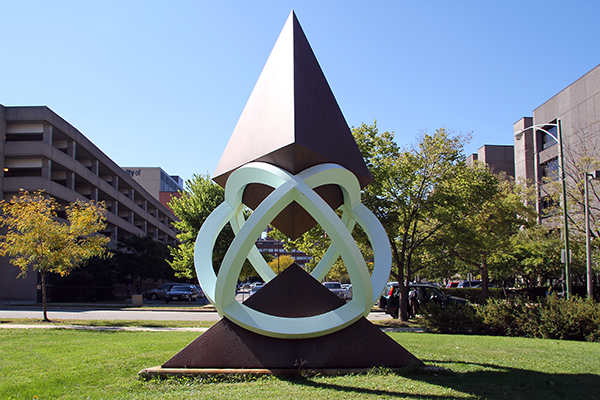
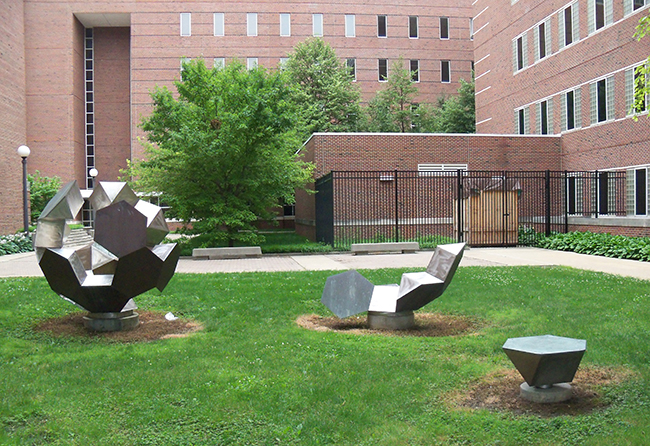
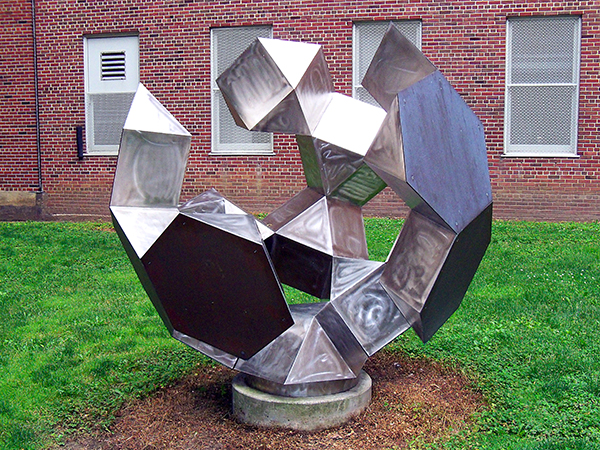
Breaking Bonds – This three-part sculpture rests in a central courtyard among three chemistry buildings dedicated to materials science, physical chemistry and organic chemistry. It incorporates the forms of carbon molecules characteristic to each field. Most prominent is a large “soccer ball” representing the geometry of a man-made carbon atom, called the buckminsterfullerene or bucky ball. Two shapes have broken free and left a rupture in the ball. One is a single hexagon, reminiscent of a graphite platelet; the other suggests an organic molecule.

.

1998: Breaking Bonds – by Stephen Luecking

.

1998: Breaking Bonds – by Stephen Luecking

.

Steve Mueller

.

1998: Fourth of Firth of Forth – by Barry Hehemann

1998: Fourth of Firth of Forth – by Barry Hehemann

.

Fourth of Firth of Forth

1998

Steel and cast concrete

18′ x 8’2″ x 13’6″ / 13,000 lbs.

Location: White River State Park, Indianapolis, Indiana.

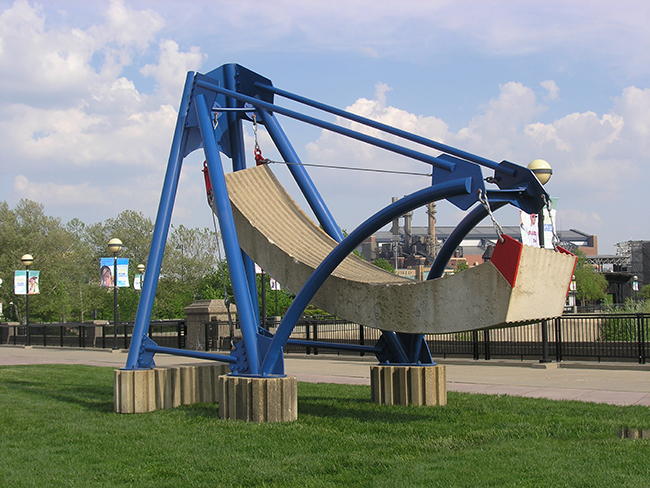
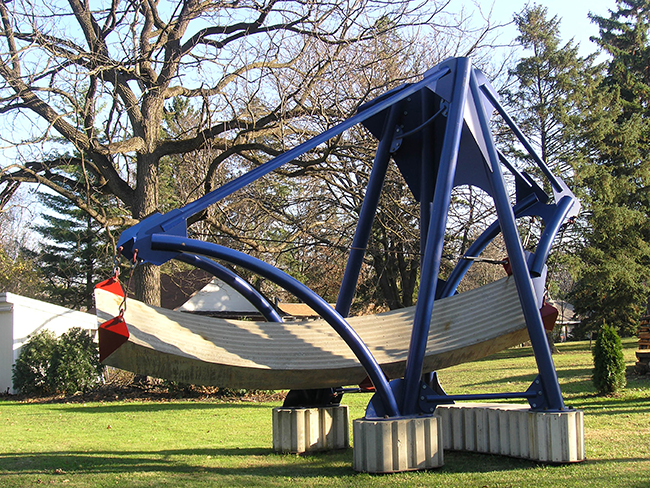
Fourth of Firth of Forth – The name is derived from the Forth Bridge across the Firth of Forth in the east of Scotland. it is constructed to suggest the double-cantilevered bridge characterized by its massive size and peculiarity of line. The sculpture weighs approximately 13,000 pounds with metal supports almost fourteen feet in height. The suspended curved concrete element seems to be drawn and twisted in tension between the supporting structures, making an oblique reference to a self-reflexive crossing between opposite parts. The title involves a series of word plays. ‘Fourth’ refers to one-fourth of the bridge from which the major forms are generated. A ‘Firth’ is a Scottish term meaning a narrow inlet of the sea. The sculpture alludes to a crossing as in the crossing of water.

In year 2000, Hehemann made “2nd 4th,” to complements the “Fourth of Firth of Forth.”

.

2000: 2nd 4th by Barry Hehemann

.

2nd 4th
2000 / Steel and cast concrete
20′ x 8’2″ x 13’6″ / 11,000 lbs.
Location: High Lake Sculpture Garden, West Chicago, Illinois.

1994: Rising Rings – by Stephen Luecking

1994: Rising Rings – by Stephen Luecking

.

Rising Rings – by Stephen Luecking

1994

Cast iron band / 8′ x 12′ x 18′

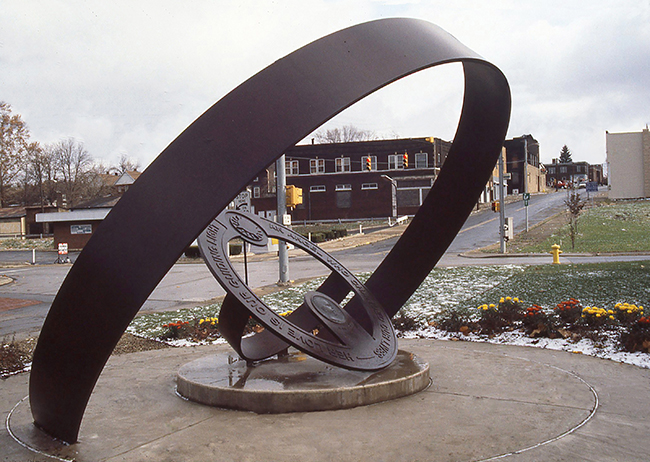
The sundial has a hole that casts a beam of light into the central ring monument on the equinoxes.

Momorail of Ambika Paul. Commissioned by Lord Swaraj Paul, founder of Caparo Steel.

Location: Caparo Steel, Farrell, Pennsylvanis.

.

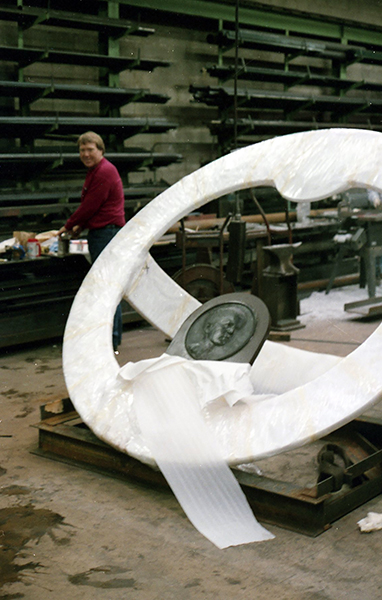
Steve Luecking at Vector

.

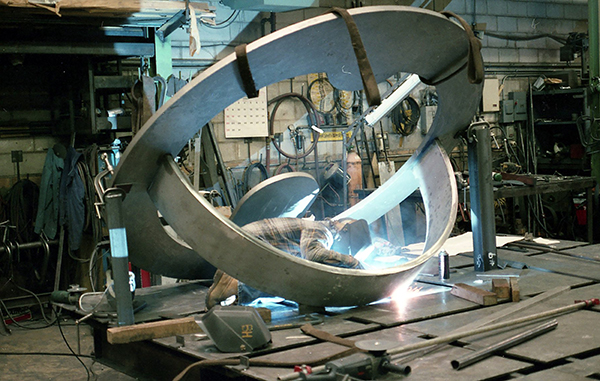
The”Rising Rings” sundial was commissioned by Dr. Swraj Paul, a steel mill owner, to honor his daughter Ambika who died in 1968 of leukemia at age four. This monument honors the inspiration her joy of life instilled in her father. At the central of the dial is a cast iron ring that holds a bronze image of her that is illuminated for several days twice a year. On two dates, Ambika’s birthday and the anniversary of the mill’s re-opening the noon sunlight passes through the circular opening in the larger ring and strikes markers on the inner ring. Miklos Simon created the portrait of Ambika mounted on the smaller ring.

.

1994: Rising Rings – by Stephen Luecking

1992: Upwells – by Stephen Luecking

1992: Upwells – by Stephen Luecking

.

Upwells – by Stephen Luecking

1992

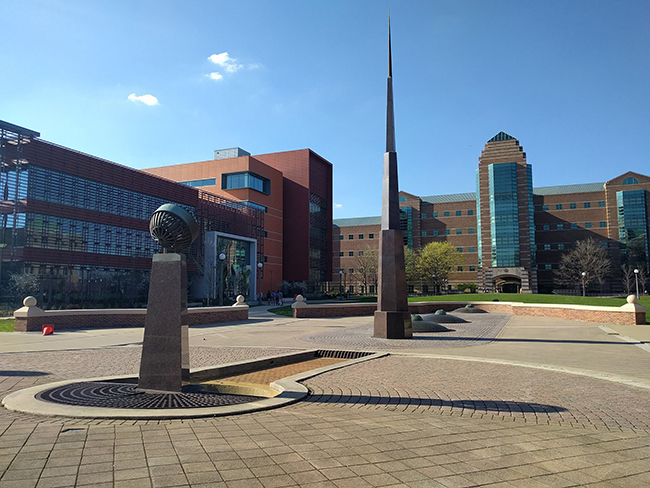
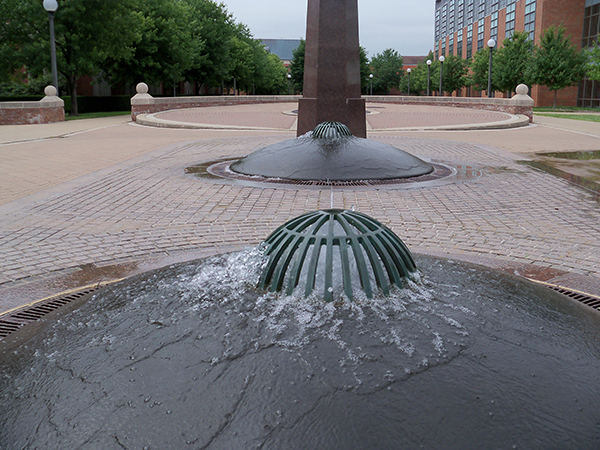
Granite, bronze and cast iron / Spire is 40 ft tall.

Location: Center quad of North Science Campus of the University of Illinois at Urbana-Champaign.

Commissioned by John Needles Chester Fund and the Illinois Capital Development Board (CDB) Percent for Art Program. A location-specific, public, environmental sculpture won design awards from the American Society of Landscape Architects in 1992 and 1995.

.

1992: Upwells – by Stephen Luecking

.

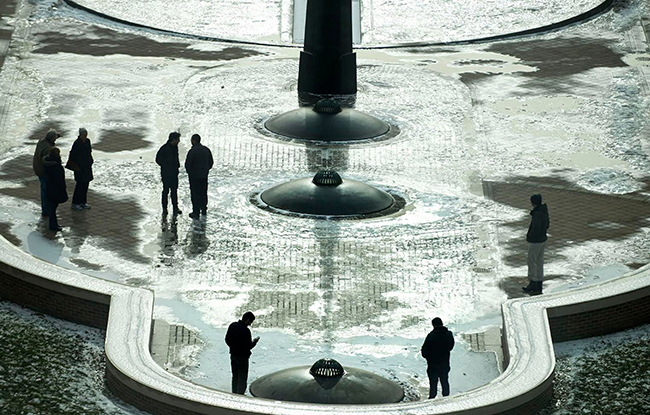
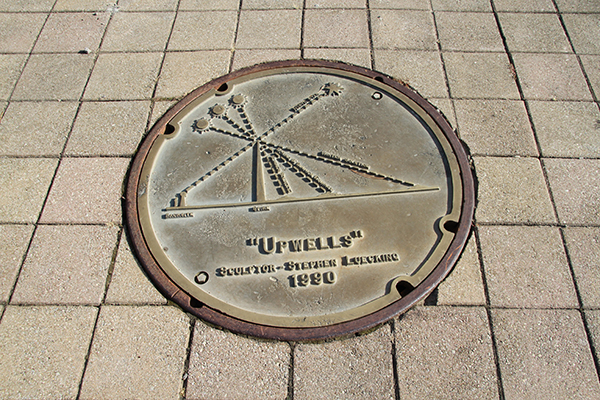
This piece is a Solar Meridian Calendar.The spire functions as a sundial which points to marker wells at local Solar Noon on the Winter and Summer Solstices and on the Vernal and Autumnal Equinoxes. A tube embedded in the back sphere allows visitors to sight on the tip of the spire to locate the Polar Star.

.

1992: Upwells – by Stephen Luecking

.

1992: Upwells – by Stephen Luecking

1990: Gyrator – by Stephen Luecking

1990: Gyrator – by Stephen Luecking

.

Gyrator – by Stephen Luecking

1990

The sculpture’s concrete base features noon and seasonal markers
that measure the daily rotation of earth and the annual orbit of the sun.

Commission from Art Program of the State of Illinois

Location: Giant City State Park, Makanda, Illinois.

“Gyrator” takes the form of a synthesis between giant top and a gyroscope. Alignments built into the concrete pad record the gyrations of the heavens as created by the circadian and annual motion of the earth. The sun marks noon each day as a disk of light falls between two parallel lines cut into the concrete. The same disk of light rings bronze plaques embedded in the concrete at the start of each season.

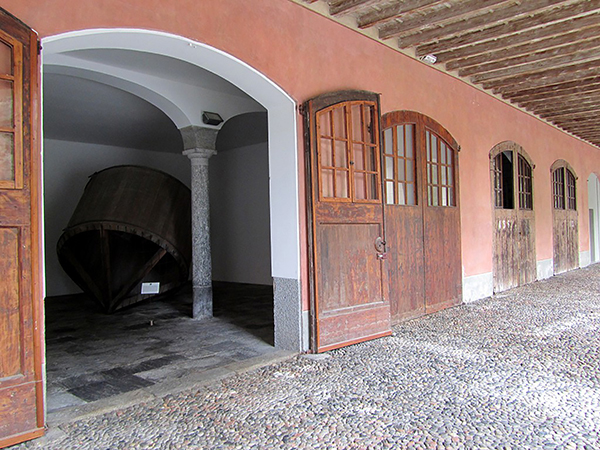
1985: Shrine – by Martin Puryear

1985: Shrine – by Martin Puryear

.

Shrine – by Martin Puryear

1985

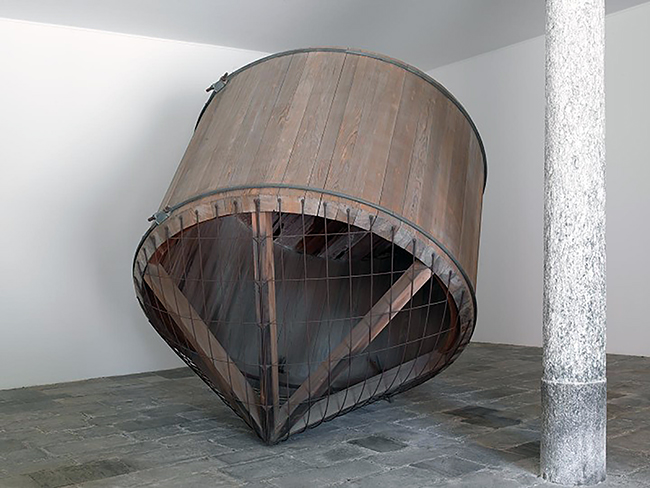
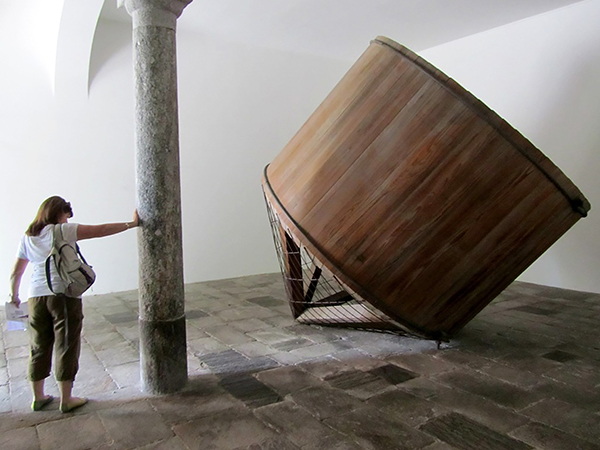
Cypress, steel and kaolin

10’6″ x 10’6″ x 8′ 117/8″

Fondo Ambiente Italiano
Villa Panza, Varese VA, Italy. / Panza collection.
Fondo Ambiente Italiano [FAI] is the National Trust for Italy. A non-profit trust based on the British National Trust.

.

1985: Shrine – by Martin Puryear

.

1985: Shrine – by Martin Puryear

.